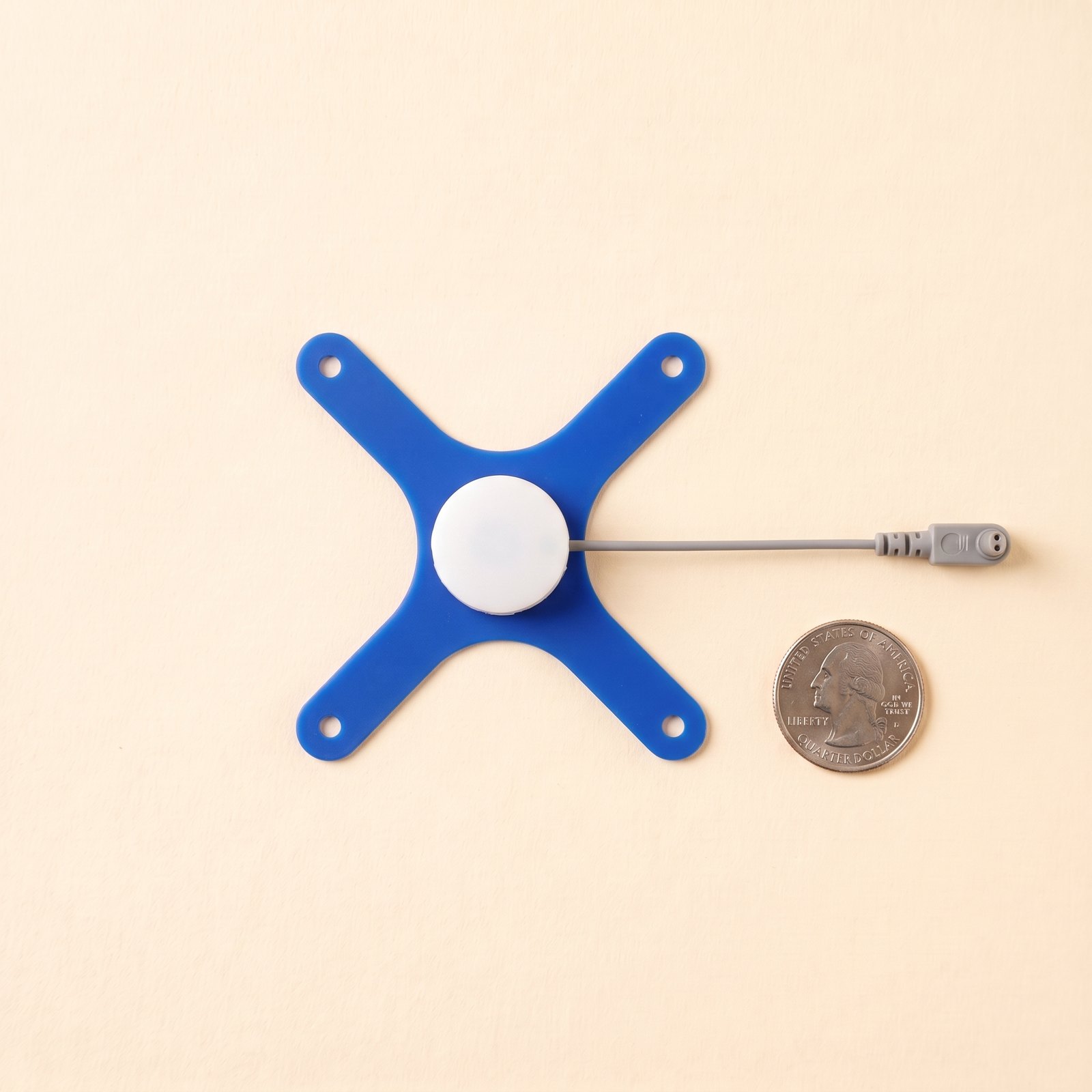
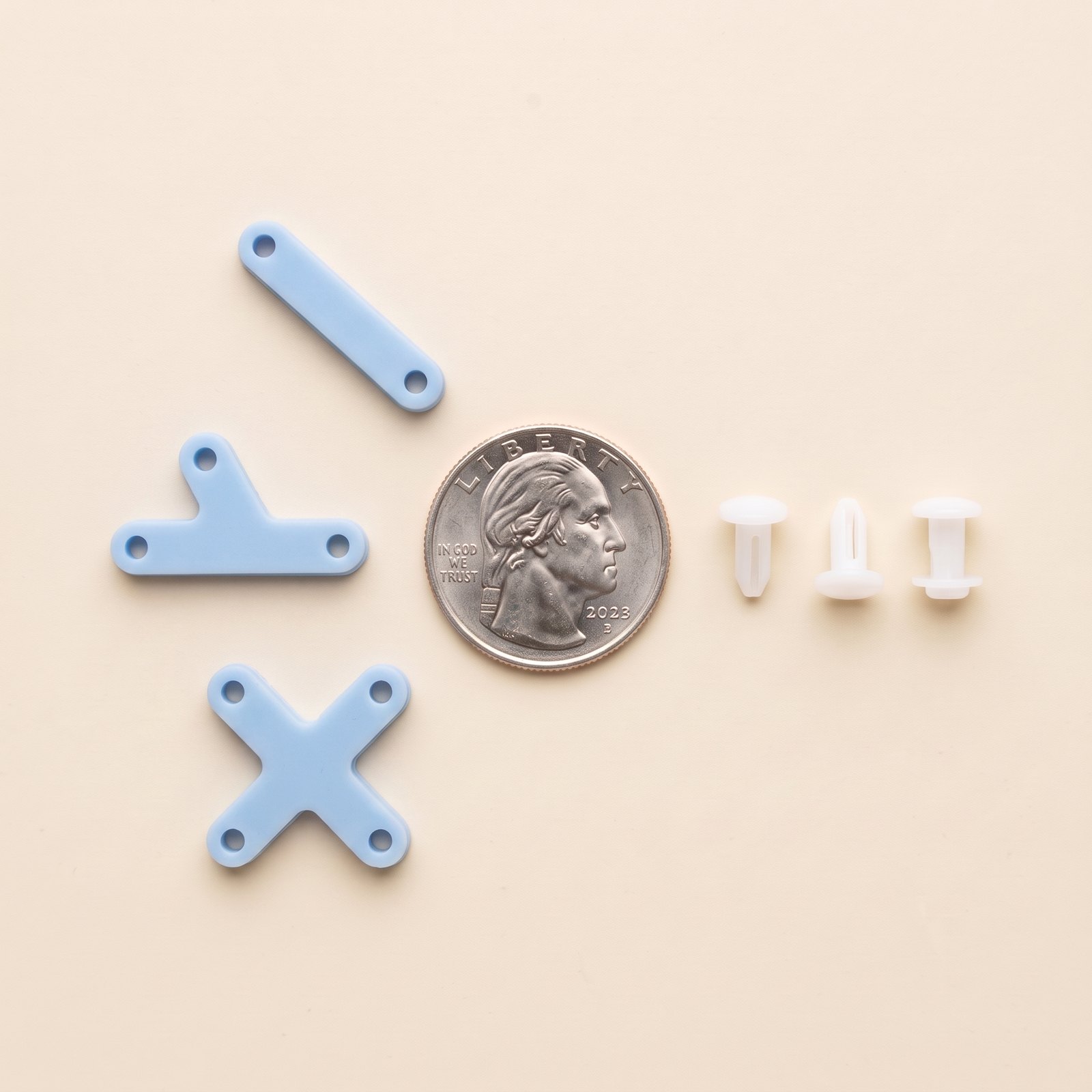
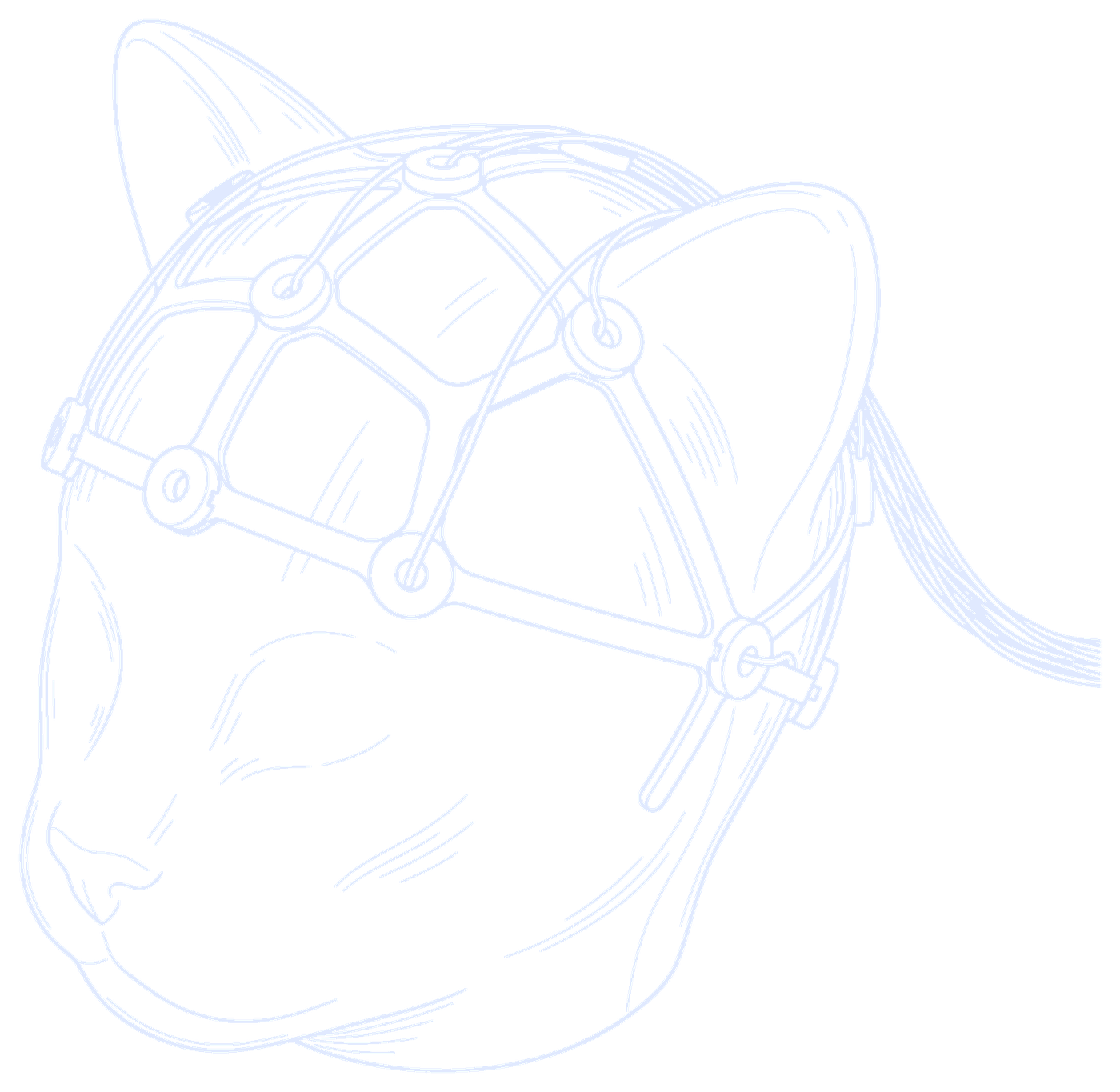
Our silicone pieces snap together into the electrode layout each head needs. The white holder that joins two pieces has a slot in its base, and a standard 10 mm gold cup slides in sideways so its face rests on the skin. This means you can keep using the electrodes you already have. Four channels go into a 24-bit board on the bench. For research use only.
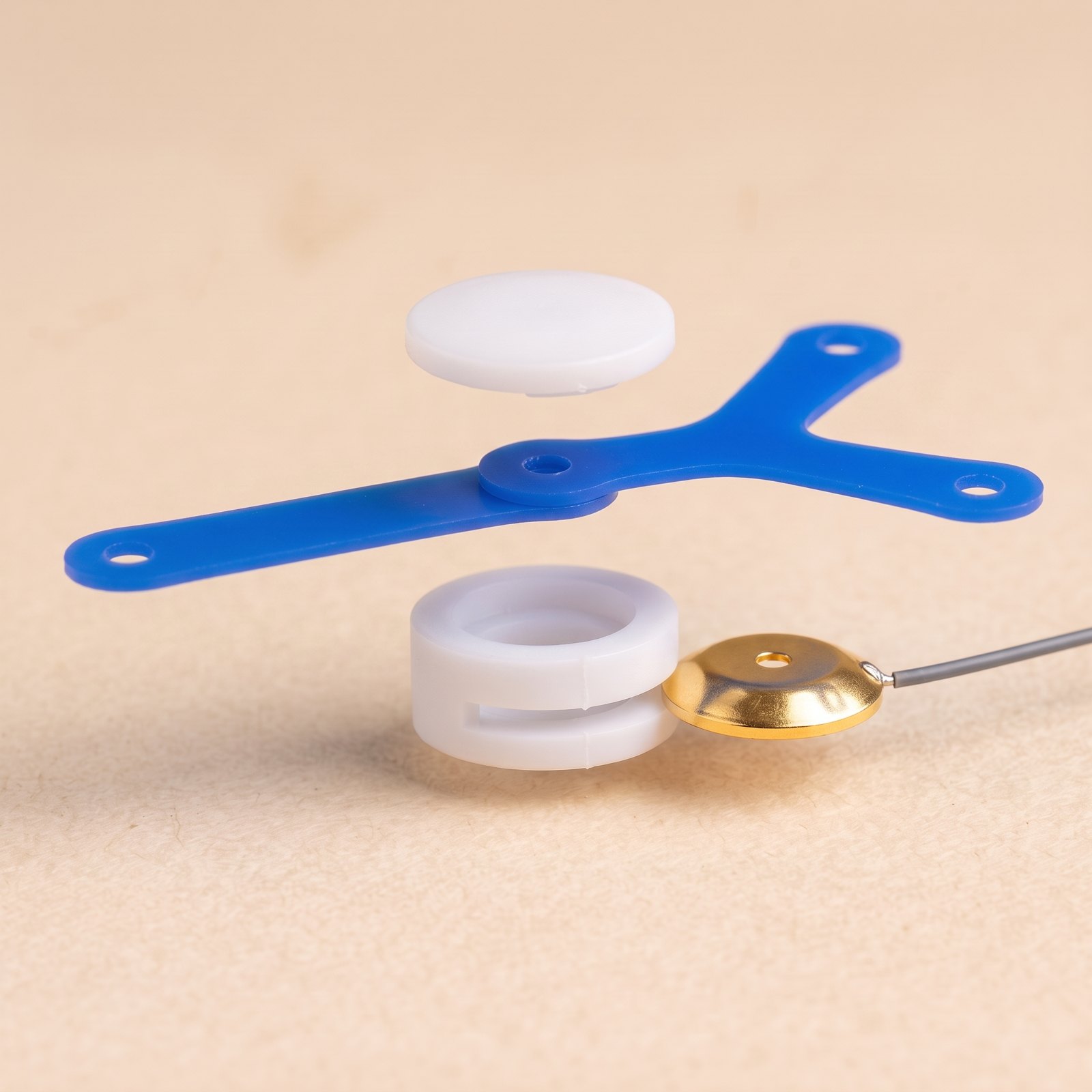
Overlap two arms so the end holes line up.
Push the white ring up through both holes and snap the cap on from above.
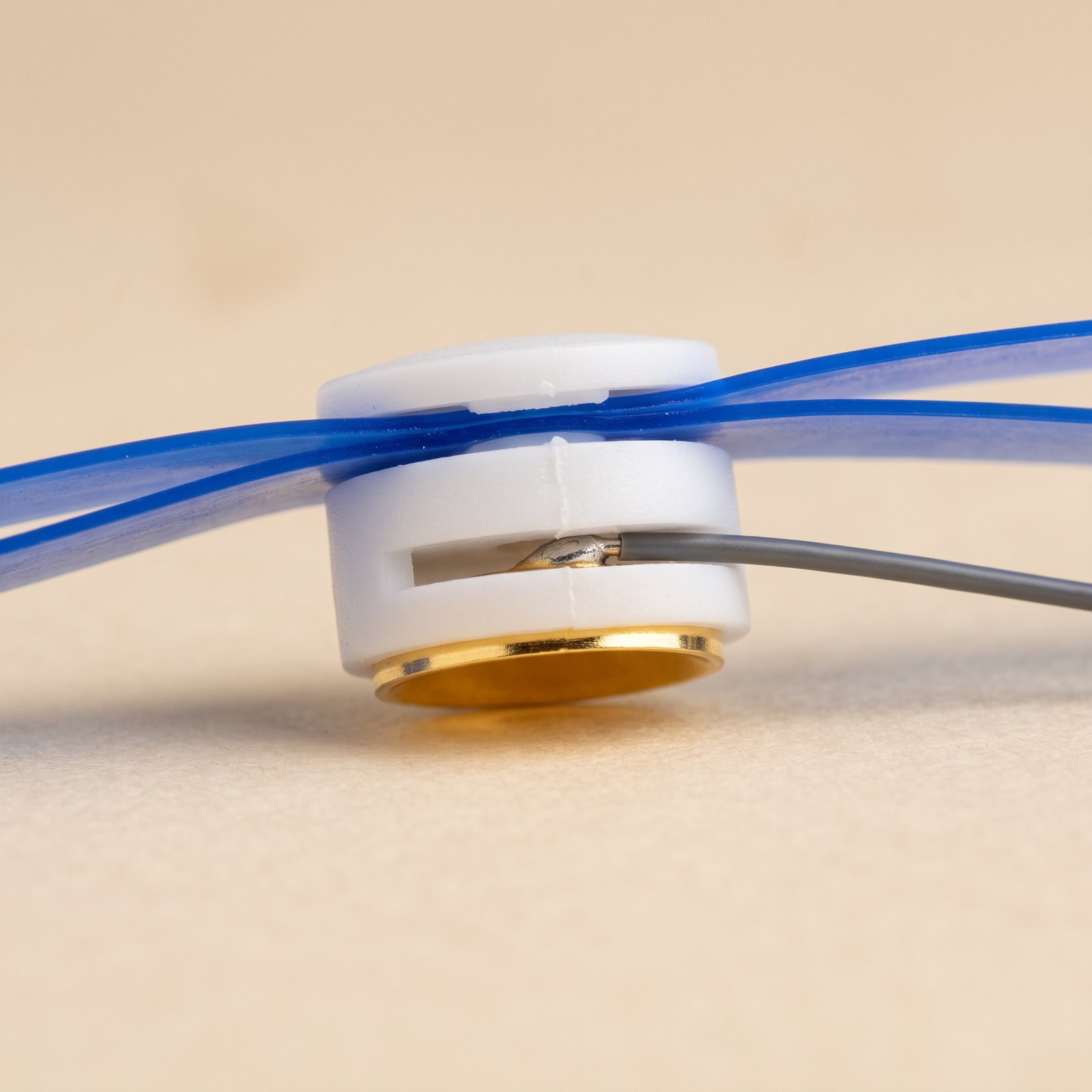
Slide a gold cup sideways into the slot in the ring base, lead first. The cup face sits on the skin and the lead runs out through the slot. You can also leave the slot empty and use the joint for structure only.
The pieces, and the holder that both joins them and seats the electrode, are patent pending in the US.
We make the mount pieces, the holders, the board and the garments that carry it. For electrodes, you are welcome to keep using your usual supplier.
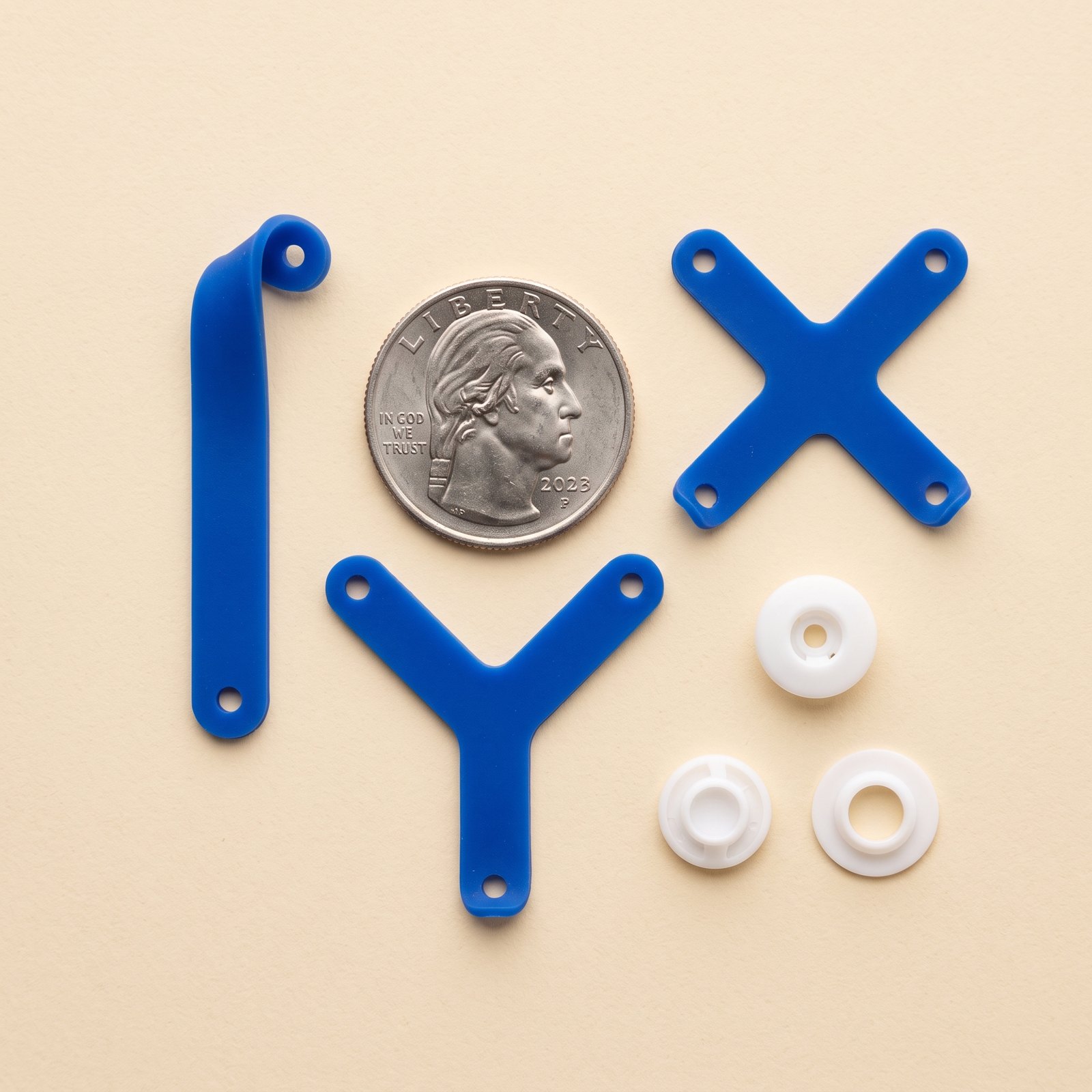
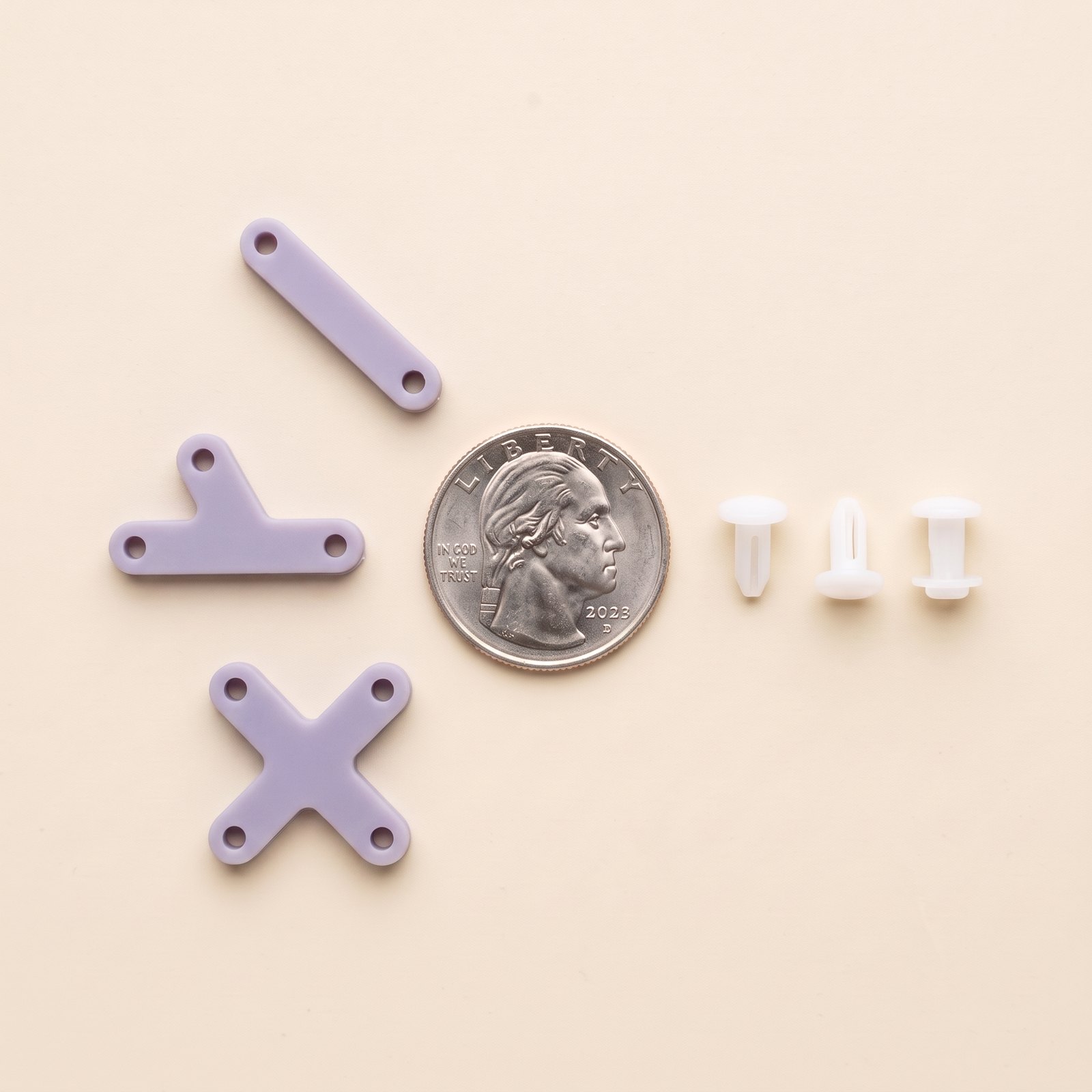
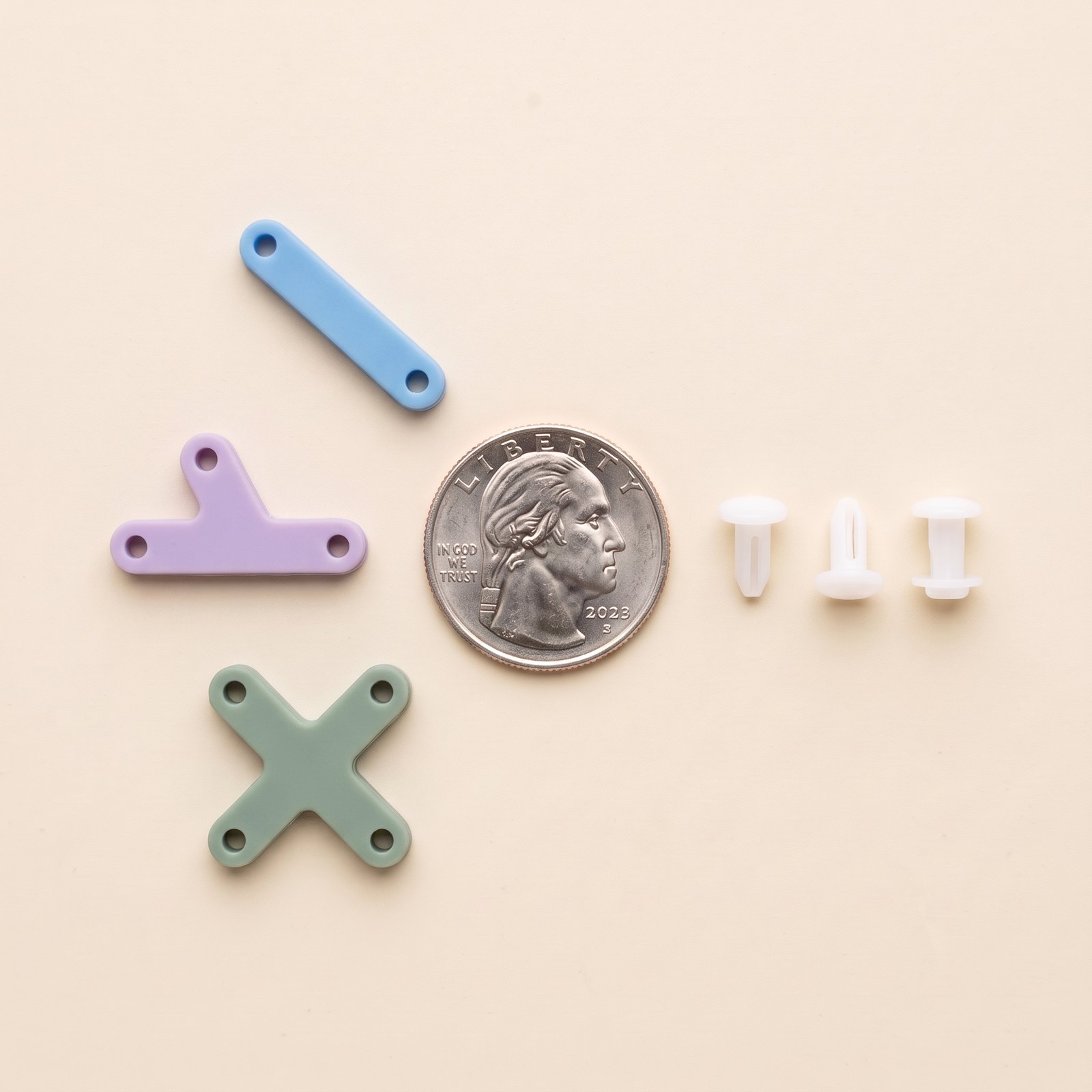
A bar, a Y and an X, cut from thin silicone sheet about a millimetre thick, with a hole at every arm end. A kitten and a Labrador can use the same parts, just in different numbers.
A two-part white ring that pins two arms together. Its base has a side slot, and a 10 mm gold cup slides in through it so the cup face sits flat on the fur. We also make blank caps for joints without an electrode. Patent pending.
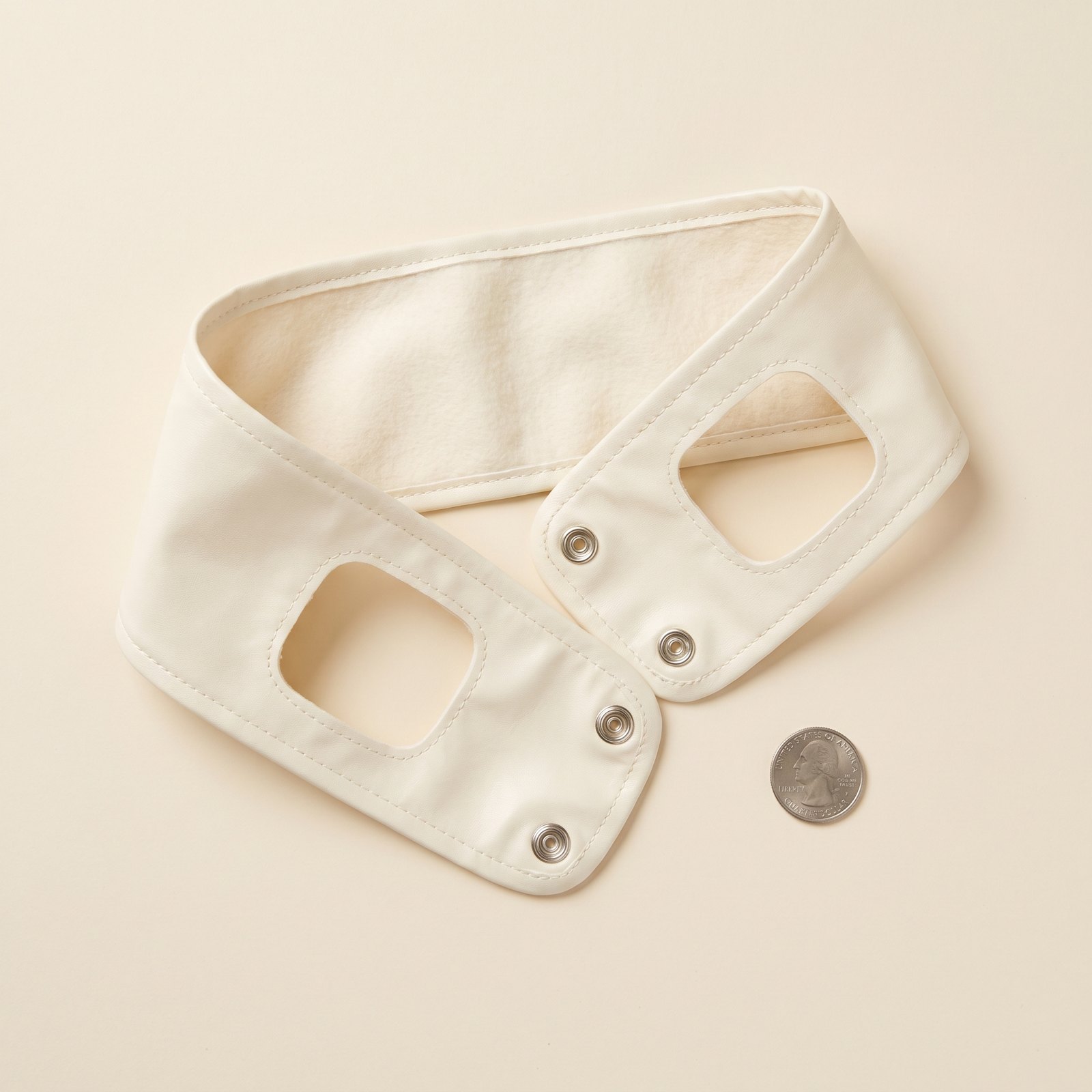
A fixed four-site layout for labs that would like the same placement on every cat. It is lined with fleece, with snap studs where the holders go.


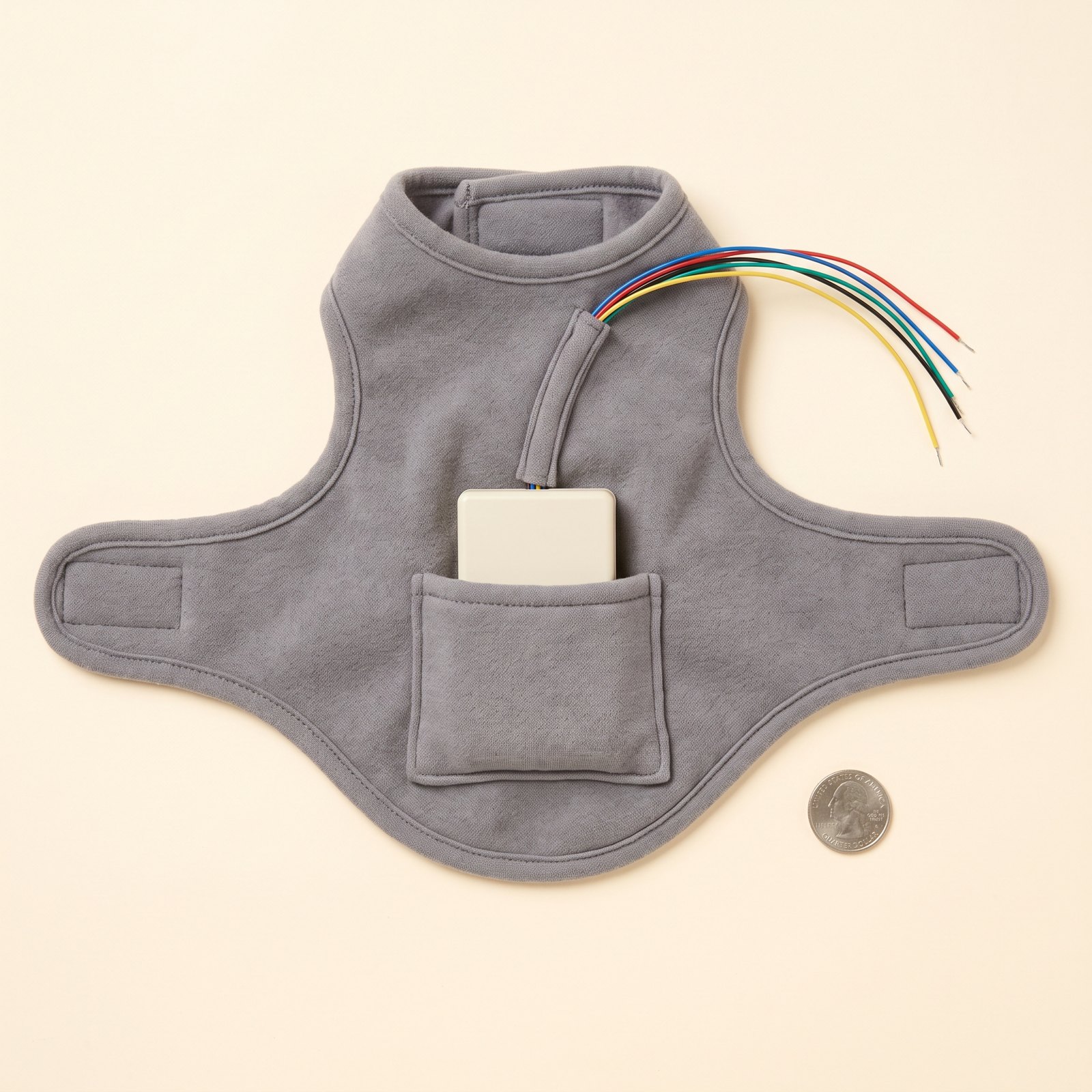
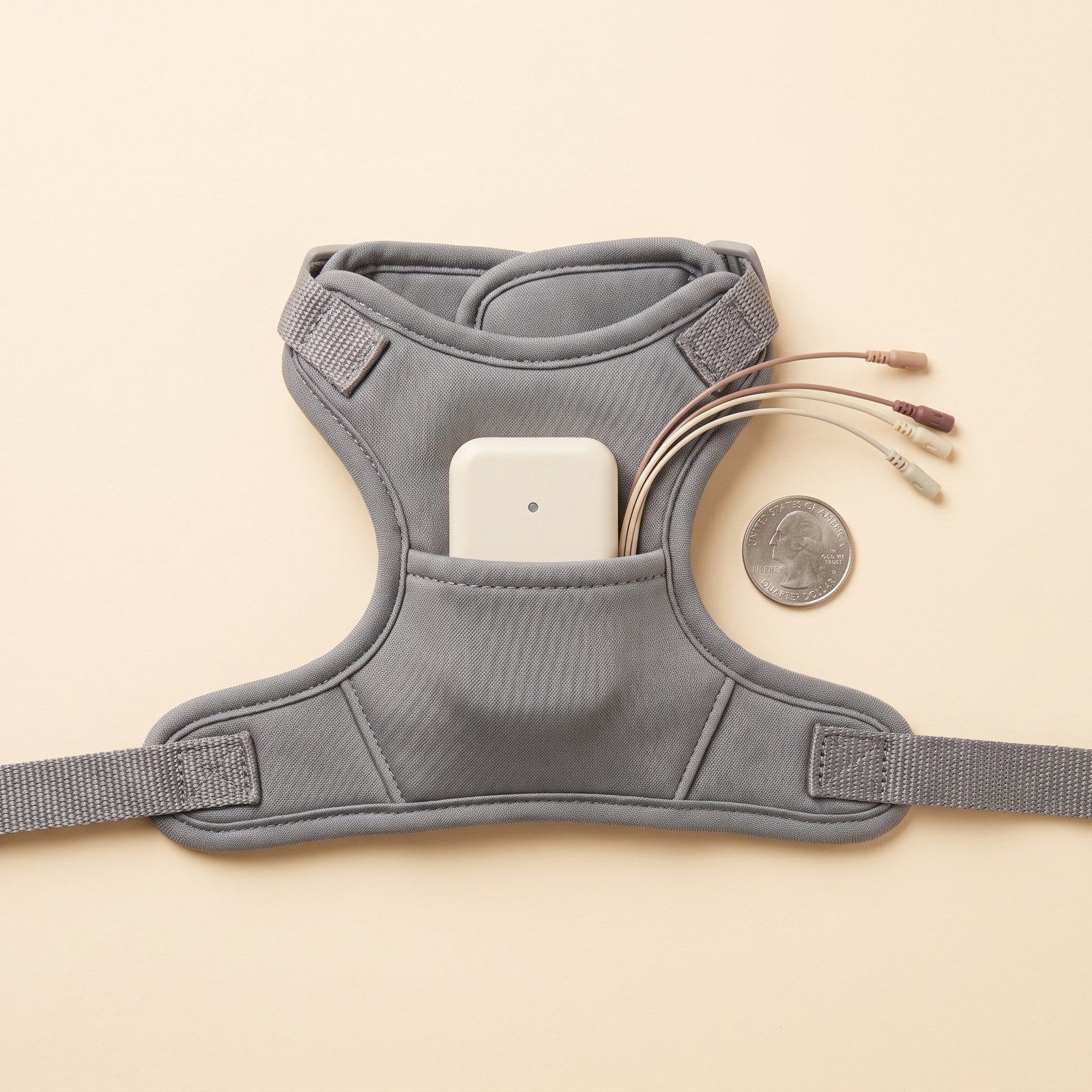
These carry the board while the animal moves, with a back pocket for the enclosure and a channel for the leads. The vest suits cats and small dogs, and the harness suits larger animals.
Cobalt is the default. Pieces are also available in sky blue, lavender, or one colour per shape so a montage is easy to read at a glance.
Research pricing, excluding VAT. Parts ship from the next production batch, and founding labs will receive theirs first.
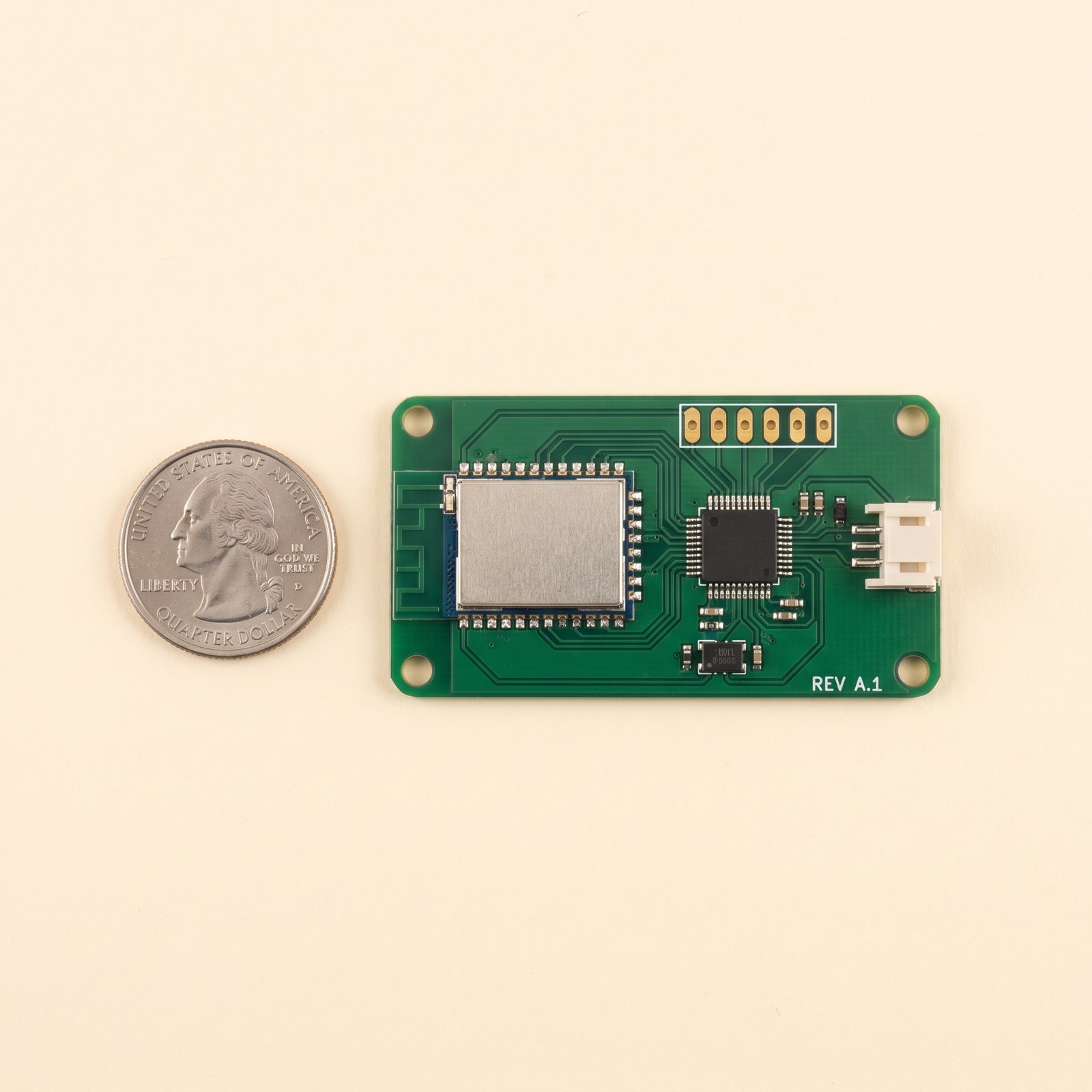
| Channels | 4 channels, each against a common reference; EMG or ECG selectable |
|---|---|
| Front end | TI ADS1299-4, 24-bit; 250 SPS to 16 kSPS, recording rate set in software |
| Input noise | About 0.14 µVrms, inputs shorted (gain 24, 250 SPS) |
| Motion, temperature | Bosch BMI270 6-axis, thermistor |
| Radio | Nordic nRF52840, Bluetooth LE 5 |
| Contact quality | Per-channel impedance logged with every recording |
| Leads | Six, 1.5 mm DIN touchproof: four signal, reference, bias |
| Formats | BDF and LSL are specified; tooling is in development. |
Use the bench enclosure with the lead set for wired work, or the vest pocket for wireless recording. The head carries only the electrodes.
Validated on awake, unshaved cats. The papers are in preparation and under submission (please see Validation below).
Muscle activity from surface electrodes through the coat. This is our main focus.
Heart rate and rhythm from the same mount, without clipping the fur.
Brain activity on the same four channels, selectable in software.
The board also records 6-axis motion and temperature, and logs contact impedance for every electrode.
We have validated the system on awake, unshaved cats. Validation and signal processing papers are in preparation and under submission, all written together with a PhD researcher in a University of Cambridge biosignal lab. We'd be glad to share our earlier IEEE EMBS conference abstracts on request.
We'd be happy to send you a raw recording with its impedance log, under NDA if you prefer, so you can judge the signal for yourself.
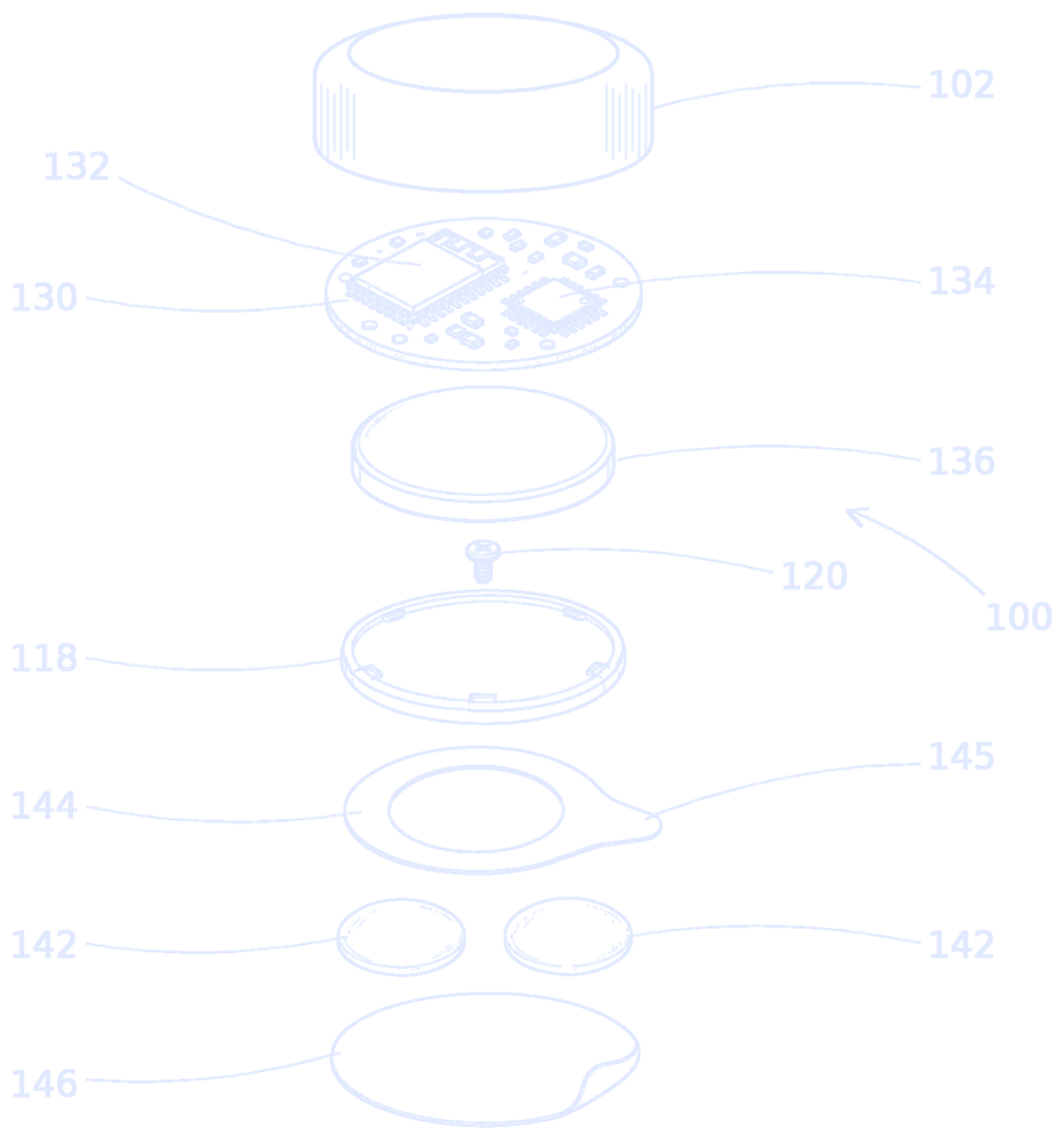
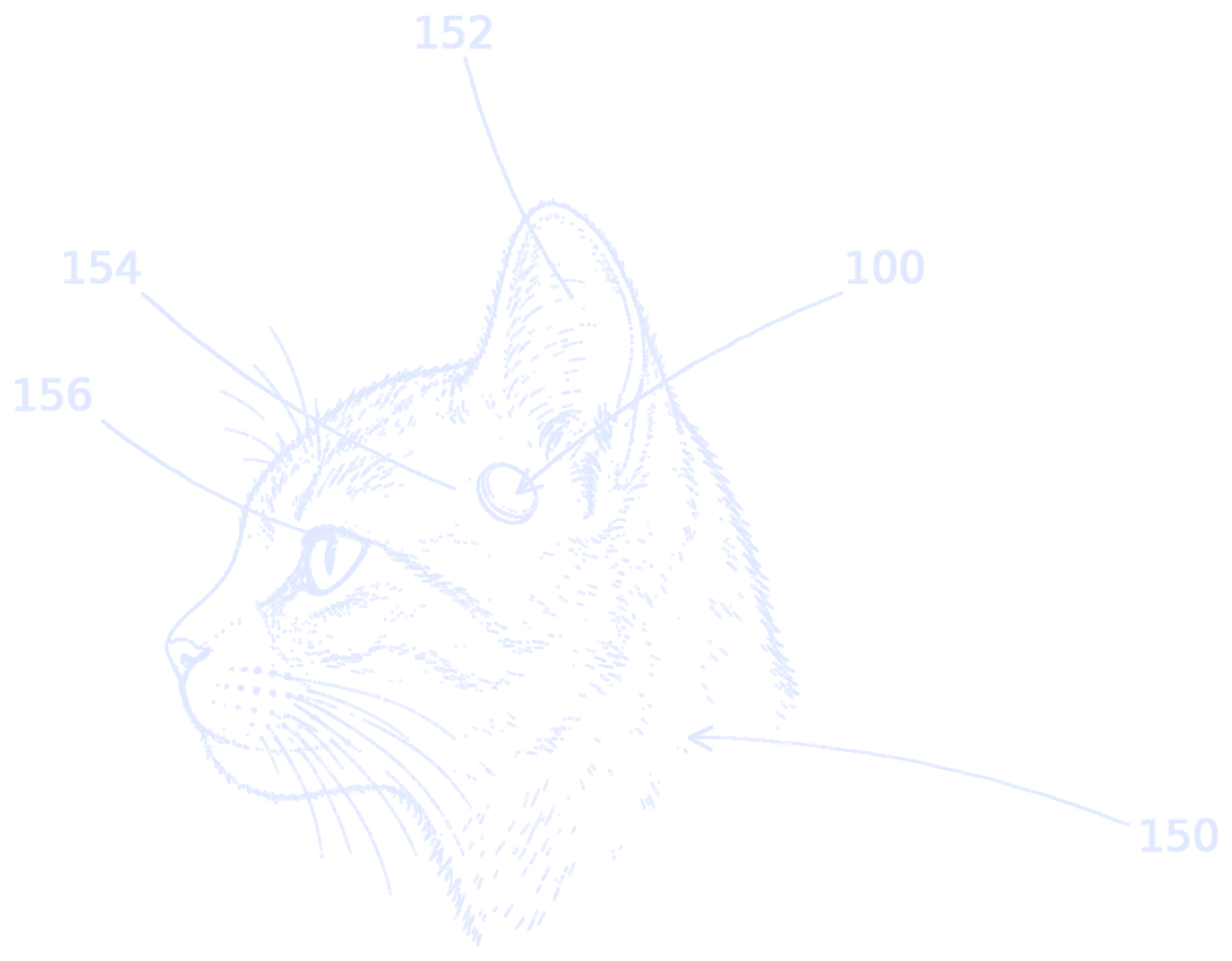
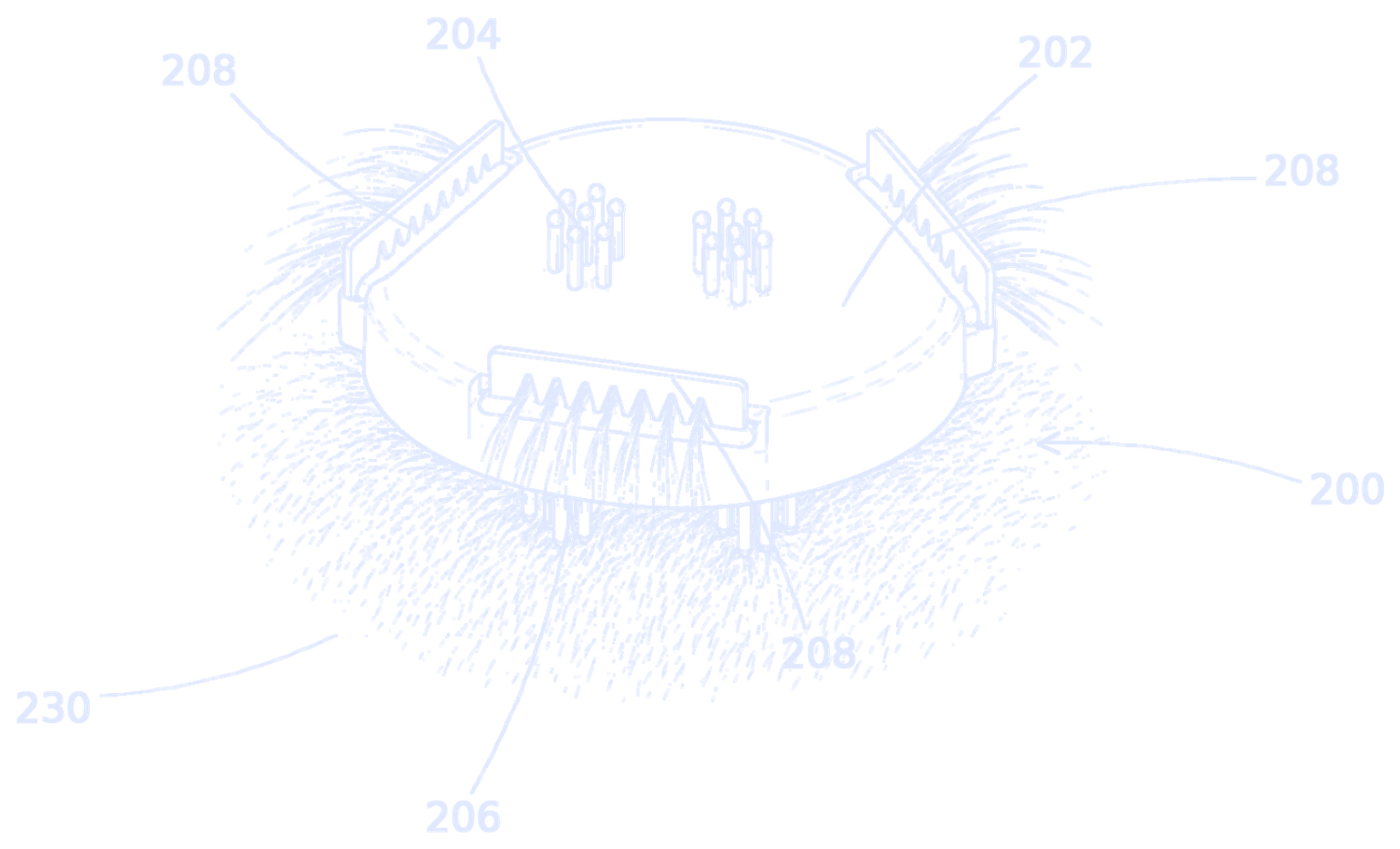
The Ear Node and Complete kits add wireless nodes for head recordings. The drawings below come from our patent applications (patent pending).
A coin-sized wireless node, about 20 mm across, that sits on the bare skin in front of the ear. Each node records muscle activity and head motion from its own electrode pair, on a single-use hydrogel sticker. There are no leads running to the animal.
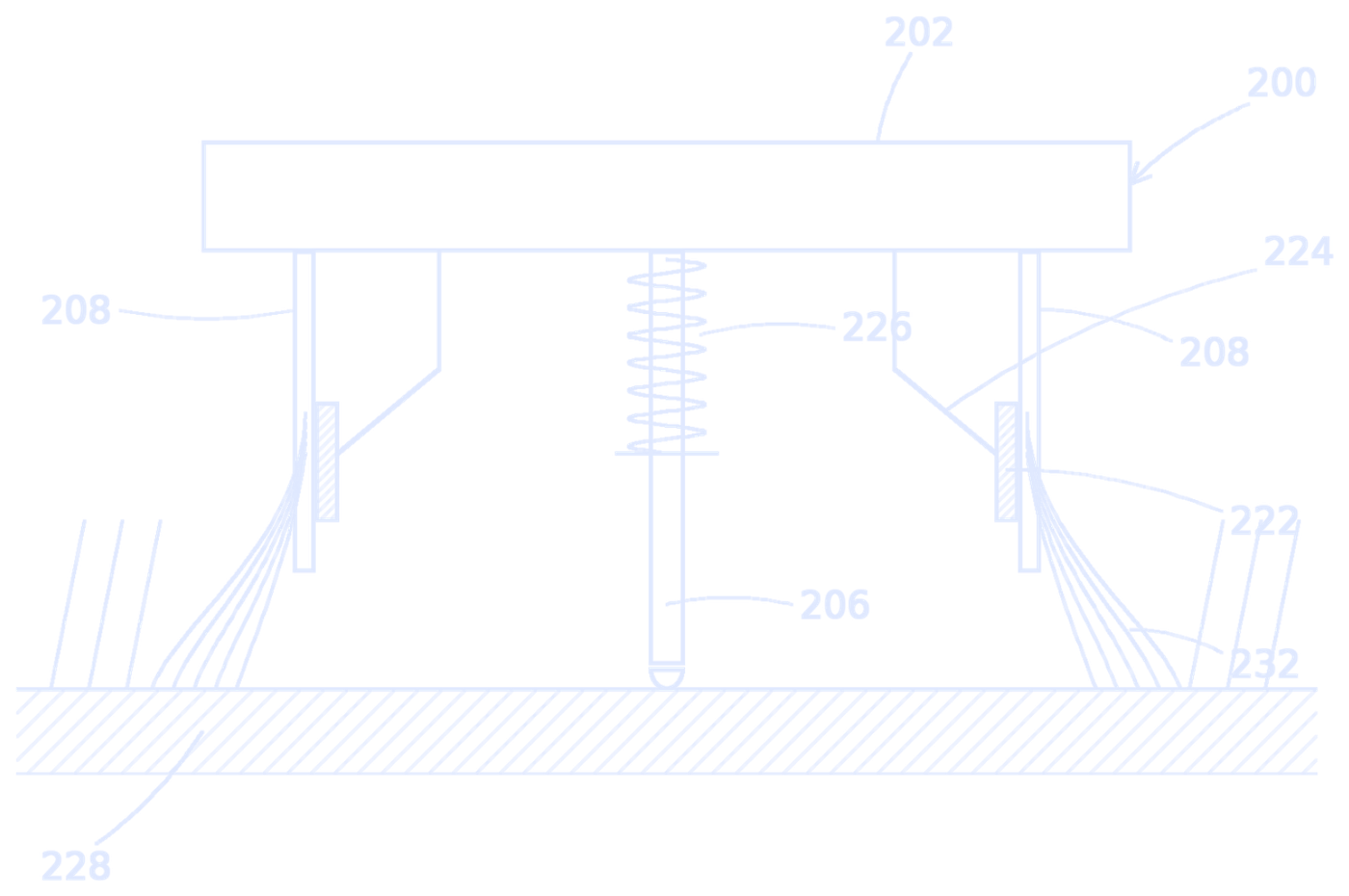
This is for furred sites such as the crown. In the way a louse holds onto a hair, fine combs grip the guard hairs near their base, and the hairs carry the light spring force that keeps the electrodes on the skin. It needs no shaving, glue or strap. We are testing it now.
Each founding lab receives the board, enclosure, lead set, a starter set of pieces and holders for your species, and a direct line to us. In return, we would kindly ask for:
Board, enclosure, six-lead set, 40 mount pieces, 40 holders, 12 gold cups, electrode paste, placement card, case, software. Ships from early December 2026.
The Montage Kit plus a pair of wireless ear nodes with hydrogel stickers. Ships from March 2027.
The Montage Kit plus hydrogel and clip ear node pairs. Ships from March 2027.
We have product sheets for the board, mount pieces, snap holder and ear node, as well as the research kit catalogue. If you leave your email, we'll be glad to send them over.
There are five short questions, and we'll reply within two working days.